Many patients considering rhinoplasty in Dubai and across the UAE want change without looking “operated,” Westernised or unfamiliar to themselves. Their concern is often not simply whether the nose can be made smaller. It is whether a refinement can remain natural, preserve identity and still respect breathing and long-term structural support.
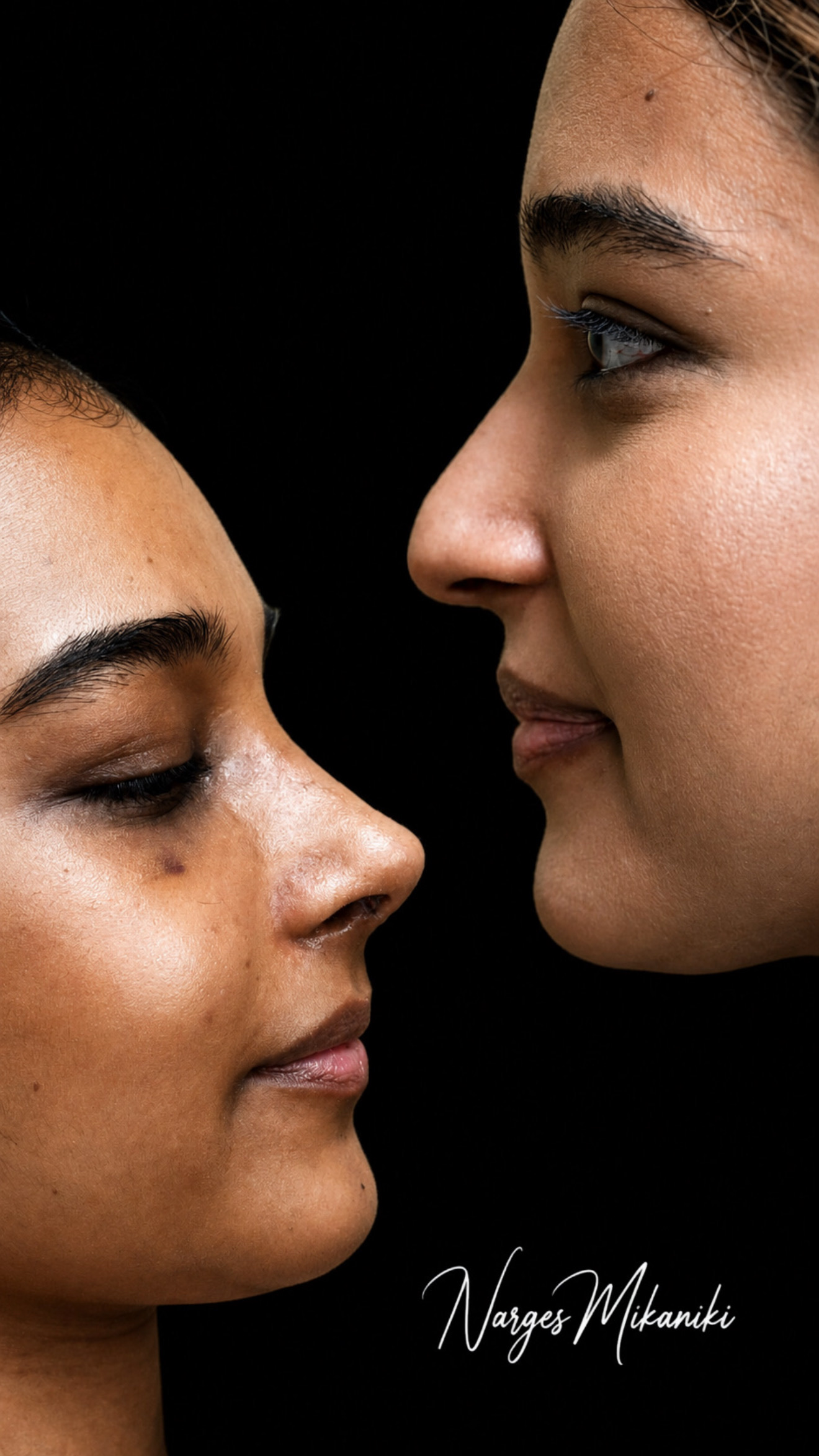
What is ethnicity-preserving rhinoplasty?
Ethnicity-preserving rhinoplasty—sometimes called ethnic rhinoplasty—is an individualised approach to nasal surgery. It aims to address the changes a patient requests while respecting the features that belong naturally with that person’s face.
The word “ethnic” does not describe one shape, one ideal or one technique. Middle Eastern, Persian, Arab, South Asian, African, Asian and mixed-heritage patients have wide anatomical variation within every group. A responsible plan is therefore based on the individual—not on applying a standard nose associated with another face or culture.
Preserving identity does not mean avoiding change
A patient may wish to soften a prominent bridge, improve tip definition, correct asymmetry, change projection or address nostril width. These can be meaningful changes. Identity preservation means deciding how far each change should go and how it will relate to the forehead, eyes, cheeks, lips and chin.
The aim is not to create the smallest possible nose. Over-reduction can produce an appearance that feels disconnected from the face and may weaken structural support. A balanced result often comes from selective refinement and preservation of characteristics the patient values.
Why this matters in the UAE
The UAE brings together patients from many cultural and anatomical backgrounds. A single aesthetic template cannot represent that diversity. Consultation should make space for patients to explain both what they want to change and what they do not want to lose.
Published medical literature also emphasises that rhinoplasty goals are influenced by culture, self-image and individual expectations. Contemporary ethnicity-conscious approaches focus on tailoring surgery to anatomy and cultural context rather than imposing one universal ideal.
A useful consultation sentence: “I want refinement, but I still want to look like myself.” Then describe the specific features you hope to preserve.
What should be assessed before surgery?
- Skin thickness and soft-tissue behaviour.
- Strength and shape of the nasal cartilage.
- Bridge height, width and profile.
- Tip support, rotation, projection and definition.
- Nostril shape and the relationship between the nasal base and face.
- Facial proportions from front, profile, three-quarter and base views.
- Septum, nasal valves, turbinates and symptoms affecting breathing.
- Previous injury, surgery or filler treatment.
Function must remain part of the plan
The structures that shape the nose also support airflow. Even when the main goal is aesthetic, breathing history and internal anatomy should be considered. If structural obstruction is present, the surgeon can explain whether functional treatment may be combined with cosmetic refinement.
Not every breathing problem is corrected by rhinoplasty. Allergy, inflammation and other conditions may require separate evaluation or treatment.
How to communicate your goals
Bring clear photographs and explain your priorities in your own words. Reference images can help identify features you like, but another person’s nose cannot simply be transferred to your face. Digital simulation may support communication, but it is a planning conversation—not a guarantee of an exact result.
It is equally useful to say what you want to keep: a strong profile, a family resemblance, a masculine or feminine character, natural tip width, or a feature that connects you to your background.
Questions to ask your surgeon
- How will the proposed changes fit my whole face?
- Which features do you recommend preserving, and why?
- Could the plan affect nasal support or breathing?
- What limitations come from my skin and cartilage?
- Can I see consistently photographed results in patients with comparable anatomy?
- What changes may continue during the first year of healing?
Frequently asked questions
Will ethnic rhinoplasty make me look like a different person?
That should not be the objective. An identity-preserving plan aims to refine selected features while maintaining the facial relationships that make you recognisable.
Is ethnic rhinoplasty one standard technique?
No. Skin, cartilage, bridge height, tip support, airway anatomy and facial proportions vary between individuals. The operation must be tailored to the patient.
Can appearance and breathing be treated together?
Sometimes, when examination identifies structural causes of obstruction. Individual assessment is required because not every breathing symptom is caused by nasal structure.
How should I explain the result I want?
Describe what you would like refined and which features you want to keep. Photographs can support the discussion, but they do not guarantee an identical result.

Reviewed by Dr. Narges Mikaniki
Double Board-Certified ENT and Facial Plastic Surgeon practising in the UAE, with a focus on primary, functional and revision rhinoplasty and natural, identity-preserving facial results.
- Middle Eastern Rhinoplasty: Balancing Form, Function, and Ethnic Identity
- Ethnic Variations and Surgical Outcomes in Rhinoplasty: A Systematic Review
- Cultural Considerations and Self-Image for Rhinoplasty Patients
- American Society of Plastic Surgeons: Plastic Surgery for Ethnic Patients
This article is educational and does not replace an examination or personalised medical advice.